
Financial services firms handle thousands of sensitive documents every week, from client agreements and tax filings to regulatory disclosures and audit reports. Without a proper document management system, that volume becomes a compliance risk.
The right financial services document management platform keeps your firm organized, audit-ready, and secure. It should handle the unique demands of financial regulations, client confidentiality, and cross-team collaboration.
This guide covers exactly what financial firms need from a document management system, including regulatory compliance, retention policies, secure file sharing, and the integrations that save hours every week.
Ready to see how it works? Start a free trial or book a demo to see SuiteFiles in action.
Why Financial Services Firms Need Dedicated Document Management
Generic cloud storage does not cut it for financial services. Firms in this sector face specific challenges that demand purpose-built solutions.
Financial advisors, wealth managers, and accounting firms deal with highly sensitive client data. A single data breach or compliance failure can result in regulatory fines, lost licenses, and irreparable damage to client trust.
Here is what makes financial document management different from general business document storage:
- Regulatory obligations. SEC, FINRA, SOX, and state-level regulations all impose strict requirements on how documents are stored, retained, and accessed.
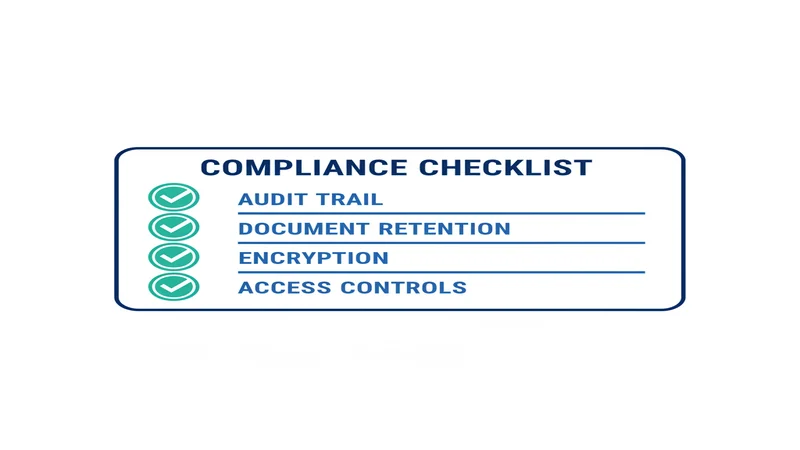
- Audit trail requirements. Regulators expect a complete, tamper-proof record of who accessed, modified, or shared every document.
- Client confidentiality. Financial data is among the most sensitive information a business can hold. Encryption and access controls are non-negotiable.
- Retention schedules. Different document types require different retention periods, some as long as seven years or more.
- Multi-party collaboration. Financial firms regularly share documents with clients, auditors, legal counsel, and regulatory bodies.
A best-in-class document management system addresses all of these needs in a single platform, rather than forcing your team to patch together multiple tools.
Key Compliance Requirements for Financial Document Management
Compliance is the foundation of document management in financial services. The consequences of non-compliance range from monetary penalties to criminal charges, so your document management approach needs to be built around regulatory requirements from day one.
SEC and FINRA Record-Keeping Rules
The Securities and Exchange Commission (SEC) requires registered investment advisors to maintain books and records for a minimum of five years. FINRA imposes similar requirements on broker-dealers, with specific rules about the format and accessibility of stored records.
Key requirements include:
- Electronic records must be stored in a non-rewritable, non-erasable format (WORM compliance)
- Records must be immediately accessible for the first two years
- Firms must maintain duplicate copies of records at a separate location
- Communication records, including emails, must be preserved and retrievable
A document management system with version control and automated retention policies makes meeting these requirements straightforward.
SOX Compliance for Public Companies
The Sarbanes-Oxley Act (SOX) requires public companies and their financial service providers to maintain internal controls over financial reporting. This means every document related to financial statements, audits, and internal reviews must be trackable and secure.
SOX compliance demands:
- Access controls that limit document visibility based on role
- Complete audit trails showing every interaction with financial documents
- Secure storage with encryption at rest and in transit
- Regular testing and documentation of internal controls
Anti-Money Laundering (AML) and Know Your Customer (KYC)
Financial firms must maintain thorough documentation of client identity verification, transaction monitoring, and suspicious activity reports. These documents must be readily available for regulatory review and typically retained for at least five years after the business relationship ends.
Secure cloud storage with granular access controls ensures these sensitive records remain protected while still being accessible to authorized compliance officers.
What to Look for in a Financial Document Management System
Not every document management platform is suited for financial services. Here are the features that matter most.
Secure Client File Sharing
Financial firms need to share documents with clients regularly, from investment statements and tax returns to engagement letters and compliance disclosures. Email attachments are risky and hard to track.
Client portals provide a secure, branded alternative. Clients log in to a dedicated portal where they can upload documents, review files, and sign agreements, all within an encrypted environment.
For financial advisory firms specifically, a dedicated client portal streamlines the entire client relationship, from onboarding to ongoing document exchange.
E-Signatures for Financial Agreements
Financial services generate an enormous volume of documents requiring signatures: client agreements, disclosure forms, account applications, compliance acknowledgments, and more.
Built-in e-signature capabilities eliminate the need for separate signing tools. Clients can review and sign documents directly within the platform, and every signature is logged with a timestamp and audit trail.
The best e-signature software for financial firms provides legally binding signatures that meet regulatory standards, while also reducing turnaround time from days to minutes.
Email Management and Filing
Financial regulators require firms to retain email communications related to business activities. Manually filing emails is error-prone and time-consuming.
An integrated email management system automatically files client emails alongside related documents. This creates a complete communication record that satisfies regulatory requirements and makes information easy to find during audits.
Automated Document Organization
Financial firms typically manage documents across hundreds of client accounts. Manual filing leads to inconsistencies, misfiled documents, and wasted time.
Auto-filing features automatically route incoming documents to the correct client folder based on predefined rules. Combined with a standardized folder structure, this ensures every document is exactly where your team expects it to be.
Role-Based Access Controls
Different team members need access to different types of documents. A junior analyst should not have the same access as a compliance officer or managing partner.
Role-based access controls let you define exactly who can view, edit, download, or share each document or folder. This is critical for both regulatory compliance and internal risk management.
How Does Document Management Improve Financial Services Workflows?
Beyond compliance, a well-implemented document management system transforms how financial firms operate day to day.
Client onboarding becomes faster. New client setup involves collecting identity documents, signed agreements, risk assessments, and financial statements. A structured client onboarding workflow with templates and checklists reduces setup time from days to hours.
Audit preparation becomes routine. When every document is organized, version-controlled, and audit-trailed, preparing for a regulatory audit is a matter of pulling reports rather than scrambling to locate files.
Collaboration improves across teams. Financial engagements often involve multiple advisors, analysts, compliance officers, and external parties. Collaborative document sharing keeps everyone working from the same source of truth.
Time savings are measurable. Financial professionals spend an average of 5-8 hours per week on document-related tasks. The right system can cut that time significantly through automation, better search, and streamlined workflows.
What Are the Risks of Poor Document Management in Financial Services?
The cost of getting document management wrong in financial services is steep.
Regulatory fines. SEC and FINRA regularly levy fines for record-keeping failures. In 2024, FINRA issued over $88 million in fines across its enforcement actions, with many cases involving inadequate record-keeping.
Data breaches. Financial services firms are among the most targeted industries for cyberattacks. Unstructured document storage and weak access controls increase vulnerability.
Lost productivity. Employees at firms without proper document management spend up to 20% of their time searching for information. At a financial advisory firm billing $200-400 per hour, that lost time translates directly to lost revenue.
Client attrition. Clients expect their financial advisors to be organized and responsive. Delayed document delivery, missed signatures, or difficulty locating records erodes trust and drives clients to competitors.
Failed audits. Inability to produce required documents during a regulatory examination can trigger enhanced scrutiny, restrictions on business activities, or worse.
Investing in a proper document management strategy is not just an operational improvement. It is a risk mitigation measure that protects your firm, your license, and your clients.
Integrations That Matter for Financial Firms
A document management system does not operate in isolation. For financial firms, integrations with existing tools determine whether the platform will save time or create more friction.
Microsoft 365 Integration
Most financial firms run on Microsoft 365 for email, spreadsheets, and presentations. A document management system with deep Microsoft 365 integration means your team can work in familiar tools while documents are automatically organized and secured in the background.
This includes Outlook integration for email filing, Word and Excel integration for document editing, and Teams integration for collaborative workflows.
Accounting Software Integration
For firms that also handle bookkeeping or financial reporting, integration with accounting platforms like Xero and QuickBooks creates a seamless workflow between financial documents and financial data.
When your accounting file storage is connected to your document management system, invoices, receipts, and financial statements flow automatically into the right client folders.
Check out the full list of available integrations to see how a document management platform connects with your existing technology stack.
How Do You Set Up Document Retention Policies for Financial Services?
Document retention is one of the most complex aspects of financial services compliance. Different regulations specify different retention periods, and failing to retain documents for the required duration is a violation, while retaining them too long creates unnecessary risk.
Here is a general framework for financial document retention:
| Document Type | Minimum Retention Period | Regulatory Basis |
|---|---|---|
| Client account records | 6 years after account closure | SEC Rule 17a-4 |
| Trade confirmations | 3 years | SEC Rule 17a-4 |
| Client communications | 3-6 years | FINRA Rule 4511 |
| Compliance manuals | 3 years after last use | SEC Rule 204-2 |
| AML/KYC documentation | 5 years after relationship ends | BSA/AML regulations |
| Tax-related documents | 7 years | IRS requirements |
| Financial statements/audit reports | 7 years | SOX Section 802 |
A document management system with automated retention policies can tag documents by type and automatically enforce these schedules. This removes the burden from individual team members and ensures consistent compliance across the firm.
Building a Secure Document Management Foundation
Security is not a feature to check off a list. For financial services firms, it is the foundation that everything else is built on.
Your document management system should provide:
- Encryption at rest and in transit. All documents should be encrypted using industry-standard protocols (AES-256 at minimum) both when stored and when being transferred.
- Multi-factor authentication. Every user, whether internal staff or external client, should authenticate using MFA to prevent unauthorized access.
- Granular permissions. Go beyond basic read/write access. The system should support folder-level, document-level, and even section-level permissions.
- Audit logging. Every action, including views, downloads, edits, shares, and deletions, should be logged with timestamps and user identification.
- Data residency options. Depending on your regulatory environment, you may need to ensure data is stored in specific geographic regions.
Learn more about cloud storage security and how modern platforms protect sensitive financial data.
For a deeper look at secure document storage features, see how role-based access controls and encryption work together to keep client data protected.
Getting Started with Financial Services Document Management
Implementing a document management system for your financial firm does not need to be a multi-month project. Here is a practical approach:
Step 1: Audit your current state. Identify where documents currently live, who has access, and where the gaps are in your compliance coverage.
Step 2: Define your folder structure. Establish a consistent structure across all client accounts. This is the single most impactful step for long-term organization.
Step 3: Set retention policies. Map regulatory requirements to document types and configure automated retention rules in your new system.
Step 4: Migrate existing documents. Move documents from legacy systems, shared drives, and email attachments into the new platform. Clean up duplicates and outdated files during migration.
Step 5: Train your team. Focus training on daily workflows: how to file documents, share with clients, request signatures, and find what they need quickly.
Step 6: Connect your tools. Set up integrations with Microsoft 365, accounting software, and any other platforms your team uses daily.
SuiteFiles is built for professional services firms, including financial advisors, wealth managers, and accounting practices. It combines document management, email filing, e-signatures, client portals, and workflow automation in a single platform designed to save your team 235+ hours per year.
Start your free trial to see how SuiteFiles handles financial services document management, or book a personalized demo to discuss your firm’s specific compliance and workflow requirements.