
Insurance companies handle thousands of sensitive documents every day. Policies, claims forms, underwriting reports, compliance records, and client correspondence all need to be stored securely, retrieved quickly, and shared across teams. Without the right system in place, these documents become bottlenecks that slow down operations and increase risk.
Start your free trial of SuiteFiles and streamline your insurance document workflows today.
An insurance document management system brings structure to the chaos. It centralizes every file, automates routine tasks, and creates the audit trails that regulators demand. For insurance firms managing complex portfolios across multiple lines of business, the right document management software can save hundreds of hours per year while reducing compliance exposure.
This guide covers what insurance companies need from a document management system, how it supports core workflows like underwriting, claims, and compliance, and what to look for when evaluating solutions.
Why Insurance Companies Need Dedicated Document Management
Insurance firms face document management challenges that generic cloud storage cannot solve. SuiteFiles provides purpose-built document management software for insurance companies, addressing the unique combination of regulatory pressure, high document volume, and multi-party collaboration that defines the industry.
The insurance industry generates more paperwork per transaction than almost any other sector. A single policy lifecycle involves applications, risk assessments, underwriting notes, binders, declarations pages, endorsements, renewal notices, and claims documentation. Each of these documents must be accessible to the right people at the right time.
Generic file storage tools like shared drives or basic cloud folders create problems at scale. Documents get misfiled. Version control breaks down when multiple adjusters work the same claim. Compliance audits become stressful events instead of routine exercises. And sensitive client data sits in systems that were never designed for the level of security insurance regulators require.
A dedicated insurance document management system solves these problems by organizing files around the way insurance firms actually work. Policies, claims, and client records follow consistent folder structures. Access controls ensure that only authorized personnel can view sensitive underwriting data. And automated workflows eliminate the manual steps that slow down every process from new business intake to claims resolution.
How Does an Insurance Document Management System Support Underwriting?
An insurance document management system transforms underwriting from a paper-heavy bottleneck into a streamlined digital process. SuiteFiles organizes all underwriting documentation in structured folders, making risk assessment faster and more consistent across your team.
Underwriting teams review dozens of documents for each submission. Applications, loss runs, financial statements, inspection reports, and supporting correspondence all need to be gathered, reviewed, and stored in a way that supports the decision-making process.
With a document management system, underwriters can access complete submission packages in one location. Document templates standardize the intake process so nothing gets missed. Auto-filing rules route incoming documents to the correct client and policy folders automatically. And version tracking ensures that everyone is working from the most current information.
The result is faster turnaround times on new business. When an underwriter can pull up a complete submission package in seconds rather than searching through email threads and shared drives, they can evaluate risk and issue quotes more quickly. That speed translates directly into competitive advantage.
What Role Does Document Management Play in Claims Processing?
Document management software for insurance companies accelerates claims processing by centralizing all claim-related files and creating clear audit trails. SuiteFiles gives adjusters instant access to policies, correspondence, photos, and settlement documents from a single organized workspace.
Claims handling is one of the most document-intensive functions in any insurance operation. First notice of loss reports, adjuster notes, photos, repair estimates, medical records, police reports, and settlement agreements all need to be organized, tracked, and retained according to regulatory requirements.
A document management system creates a complete digital file for each claim. Every document is time-stamped and linked to the correct claim number, policyholder, and coverage line. Adjusters can collaborate on complex claims without losing track of who added what information and when.
Email management features are particularly valuable in claims workflows. Much of the back-and-forth communication with claimants, attorneys, and vendors happens via email. A good document management system captures these emails and files them alongside the rest of the claim documentation automatically, creating a complete record without manual effort.
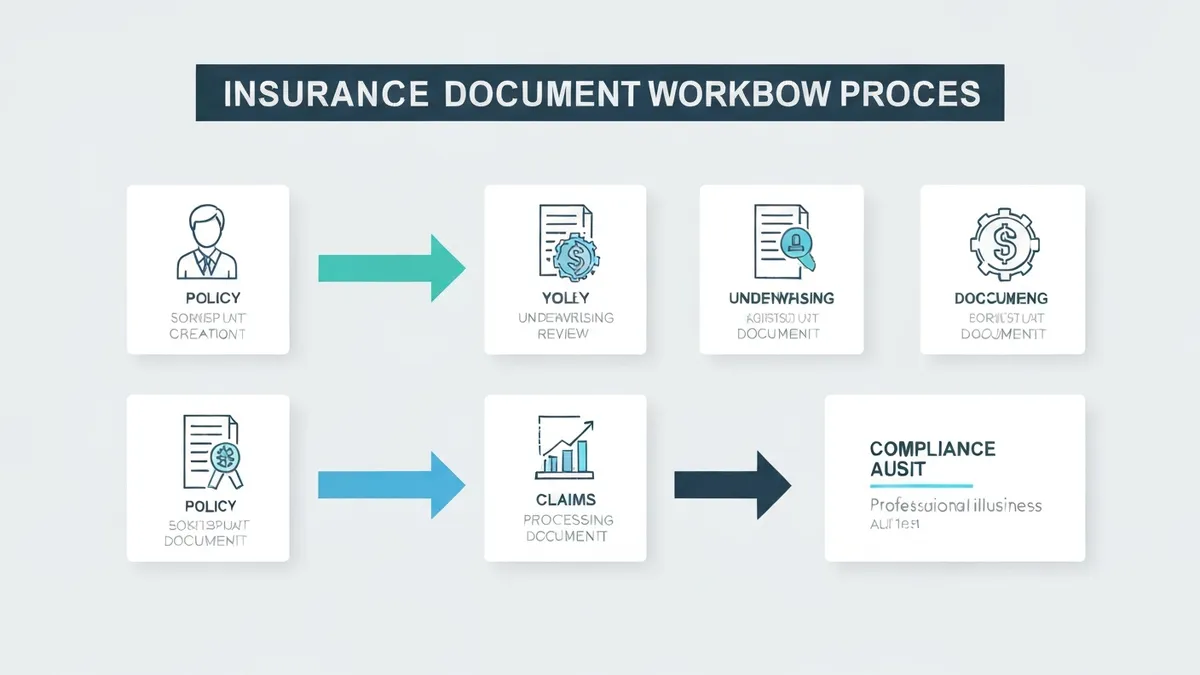
Meeting Regulatory Compliance Requirements
Insurance document management is essential for meeting the regulatory requirements that govern the industry. SuiteFiles creates automatic audit trails for every document action, helping insurance firms demonstrate compliance during state and federal examinations without scrambling to assemble records.
Insurance companies operate under some of the most stringent regulatory frameworks in the financial services sector. State departments of insurance conduct regular market conduct examinations. NAIC model regulations set standards for record retention, privacy, and data security. And industry-specific requirements around claims handling, producer licensing, and rate filings add additional layers of documentation obligations.
A document management system supports compliance in several practical ways. Retention policies ensure that documents are kept for the required periods and disposed of appropriately when those periods expire. Access controls create clear records of who viewed or modified sensitive documents. And search functionality means that when an examiner requests specific records, your team can produce them quickly and completely.
The alternative is a compliance process built on manual tracking and tribal knowledge. When key staff members leave, institutional memory about where documents are stored and how long they must be kept goes with them. A document management system captures that knowledge in automated rules and consistent folder structures that persist regardless of staff turnover.
Book a demo to see how SuiteFiles handles insurance compliance documentation.
Key Features to Look for in Document Management Software for Insurance Companies
The best document management software for insurance companies combines secure storage, intelligent organization, and workflow automation. SuiteFiles delivers all of these capabilities in a single platform built for professional services firms, saving insurance teams 235+ hours per year through automation alone.
Not every document management system is built for the demands of insurance operations. When evaluating solutions, insurance firms should prioritize these capabilities.
Secure Client Portals
Insurance firms exchange sensitive information with policyholders regularly. Applications, financial statements, claims documentation, and policy documents all contain personally identifiable information that must be protected in transit and at rest. Secure client portals provide an encrypted channel for sharing these documents without relying on email attachments.
Email Management and Filing
Email is still the primary communication channel in insurance. Producers correspond with clients. Adjusters communicate with claimants and vendors. Underwriters exchange information with brokers and reinsurers. A document management system that integrates with Microsoft 365 captures these emails and files them in the correct client or policy folders automatically.
Document Templates and Auto-Filing
Consistency matters in insurance documentation. Proposal letters, coverage summaries, renewal notices, and claims acknowledgments should all follow standard formats. Document templates ensure that every communication meets your firm’s standards while saving time on document creation. Auto-filing rules eliminate the manual work of sorting incoming documents into the right folders.
Unlimited E-Signatures
Insurance transactions require signatures at multiple stages. Applications, binders, policy changes, endorsements, and claims releases all need to be signed. Built-in e-signature functionality eliminates the delays caused by printing, signing, scanning, and emailing documents back and forth. SuiteFiles includes unlimited e-signing so your team never has to worry about per-signature costs adding up.
Search and Retrieval
When a policyholder calls about a claim, your team needs to find the relevant documents immediately. Full-text search across all stored documents means that finding a specific policy endorsement or claim note takes seconds rather than minutes. For firms handling thousands of active policies, fast search is not a nice-to-have. It is a core operational requirement.
How SuiteFiles Supports Insurance Firms
SuiteFiles is a comprehensive document management platform designed for professional services firms, including insurance companies. The platform combines document storage, email management, templates, e-signatures, and client portals in a single solution that integrates with the tools insurance teams already use.
For insurance firms specifically, SuiteFiles offers several advantages over generic document management tools.
The platform’s folder structure mirrors how insurance companies organize their work. Client folders contain policy sub-folders, which contain all related documents, correspondence, and notes. This structure is consistent across every client, making it easy for any team member to find what they need.
Microsoft 365 integration means that documents created in Word, Excel, or Outlook are automatically saved and organized within SuiteFiles. There is no need to switch between applications or manually save files to the correct location.
Automation features handle the repetitive tasks that consume hours every week. New client onboarding, policy renewal notifications, and claims intake documentation can all be partially or fully automated using templates and auto-filing rules. SuiteFiles saves teams 235+ hours per year through these automation capabilities.
Try SuiteFiles free and see how it transforms your insurance document workflows.
Getting Started with Insurance Document Management
Implementing a document management system does not need to be a disruptive project. The most successful implementations follow a phased approach that builds momentum without overwhelming the team.
Start with your highest-volume document workflows. For most insurance firms, that means claims documentation and new business intake. Migrate these workflows to the document management system first, establish folder structures and naming conventions, and train the team on the new process.
Once those core workflows are running smoothly, expand to underwriting documentation, policy servicing, and compliance record-keeping. Each phase builds on the structures established in the previous one.
The key is to establish consistent standards from the beginning. Define your folder hierarchy, naming conventions, and access permissions before you start migrating documents. These decisions are much easier to make upfront than to retrofit after thousands of documents are already in the system.
Also consider how the system will integrate with your existing technology stack. Insurance firms typically use agency management systems, policy administration platforms, and accounting software alongside their document management tools. Integration capabilities determine how seamlessly these systems work together.
Frequently Asked Questions
What is an insurance document management system?
An insurance document management system is software designed to store, organize, and manage the documents that insurance companies create and receive. This includes policies, claims files, underwriting reports, compliance records, and client correspondence. Unlike generic cloud storage, an insurance DMS provides features specifically suited to insurance workflows, such as automated filing, regulatory retention policies, and secure document sharing with policyholders.
How does document management software help with insurance compliance?
Document management software supports insurance compliance by creating automatic audit trails for every document action. It tracks who created, viewed, modified, or shared each document and when. Retention policies ensure documents are kept for the periods required by state regulations and NAIC guidelines. When regulators request records during examinations, the system enables fast, complete retrieval.
Can an insurance DMS integrate with agency management systems?
Yes. Modern document management systems integrate with agency management systems, email platforms like Microsoft 365, and other business tools. SuiteFiles offers deep integrations with Microsoft 365, Xero, QuickBooks, and other platforms that insurance firms commonly use. These integrations eliminate double entry and ensure that documents are automatically filed in the correct locations.
How long does it take to implement an insurance document management system?
Most insurance firms can get a document management system up and running within a few weeks. The initial setup involves configuring folder structures, setting access permissions, and migrating priority documents. SuiteFiles is designed for quick deployment and includes onboarding support to help teams get productive quickly. A phased approach, starting with claims and new business workflows, minimizes disruption.
What security features should insurance document management software include?
Insurance document management software should include encryption at rest and in transit, role-based access controls, multi-factor authentication, and detailed audit logging. Secure client portals for document exchange are also important, as insurance firms regularly share sensitive information with policyholders. SuiteFiles provides all of these security features as standard.
Is cloud-based document management secure enough for insurance companies?
Cloud-based document management meets and often exceeds the security standards of on-premise solutions. Leading cloud platforms use enterprise-grade encryption, redundant data centers, and continuous security monitoring. For insurance firms, cloud-based solutions also provide the advantage of secure remote access, allowing adjusters, producers, and support staff to access documents from any location while maintaining full security controls.
Ready to modernize your insurance document management? Book a demo with SuiteFiles.